

"SIMPLE PLEASURES" - AN APPROACHABLE HOME STYLE HOW TO GUIDE. Apply simple pleasures to home decor to create your very own custom interior. With a little thought and common sense, anyone can have rooms that are functional, uncluttered and beautiful. It's easy. Let me show you how.
Wednesday, February 8, 2017


Tuesday, September 30, 2014
A view from inside the People's Climate March.

‘With world leaders coming to New York City for a landmark summit on climate change, people around the world took to the streets to demand action to end the climate crisis.’
Like prompt Vermonters, my husband and I arrived early for The People’s Climate March in New York City. The cab driver who drove us across town hadn’t even heard of the march. We had to inform him that many city blocks were going to be closed off with police barriers. We were practically the only two people there. It was early and quiet on Central Park West and 63rd Street, but there was an expectant hush in the air as joggers passed by with intrigued expressions as marchers started setting up.

A handful of young activists in colorful t-shirts were laying large bright orange circles on brown cardboard poles on the avenue between 62 and 63rd street, taking up a whole a city block. These artsy life preservers represented the city communities hardest hit by Hurricane Sandy. Sidestepping names like Canarsie, Red Hook, Rockaways, I found the one we came to represent - Breezy Point. Sandy left my 86 year old Dad a Climate Change refugee when it washed through our Breezy Point home. This march wasn’t just a curiosity.....it was deeply personal.
Texting my daughter Elizabeth at that early hour, she teased back that the march didn’t start for hours. I replied that every march of a thousand starts with two.
We walked the empty streets down Central Park West to Columbus Circle, where the police had created a barricaded area for the dignitaries and the media to set up shop. Things were starting to bustle there and we called to Bill McKibben who came over and gave us a hug and a photo op. Same with Bernie Sanders, a handshake and a photo. Vermont is a small state and we have the luxury of personally knowing our local celebrity activists and politicians.
It was fun to watch the streets come alive with people carrying colorful and thought provoking signs and to watch the activists moving the large art pieces into line. Finally, the march began. We were surrounded by a cross section of the New York City communities from all walks of life, ages, demographics and there was a feeling of camaraderie among this diverse group of New Yorkers. Resolute, steadfast, determined, people held their signs high, banging drums and chanting together. The truth is, protesting is a heck of a lot of fun and New York City made the perfect backdrop as we slowly marched down Central Park West, turned at Columbus Circle and headed down Sixth Avenue. Everyone knew we were making history.

At precisely two minutes before 1:00 pm, a hush fell over the crowd as the marchers held their hands in the air to silence the crowd in a wave that reached to the back of the line, to honor those already suffering in the face of climate change. I watched a jaded New York cop straighten a bit in wonderment as this silent power that washed the crowd of what we now know was 400,000 strong. After two long minutes, the silence was broken with a deafening noise as the crowd of thousands clamored to signal the alarm of climate change.
This peaceful demonstration of people power was organized seamlessly by over 1500 environmental groups around the world, with our very own Vermont 350.org group founded by Bill McKibben leading the way. There were similar marches in 162 countries around the world, Paris, London, New Delhi, Peru, Egypt and on and on.
It was an amazing moment in history and I wouldn’t have missed it. I won’t miss the next one either as we continue on the people’s path to respecting and honoring our home planet, Mother Earth.
Thursday, November 7, 2013
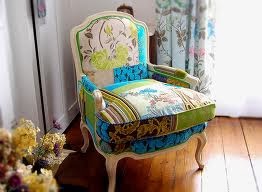
To re-upholster or not to re-upholster? THAT is the question.
This is a frequently asked question with no easy answer, so let’s uncover this subject together.

The first step is to really look at the piece you are considering for re-upholstery. Quality counts when evaluating a piece of furniture. A high quality sofa or chair has eight-way hand tied coil spring construction and is made with solid hardwoods. The frame should have a heft to it and if you reach under the seat you will be able to feel the coils.
If the sofa or chair is the correct size for your room and the styling fits into your décor, it may be worth recovering. The added bonus is that you will not need to discard it and that is always a good thing. There are tricks to restyling that a good designer and upholster can share with you, such as removing or adding tufting to a pillow back; adding decorative nail head trim, gimp or double welting; adding additional padding to seats or redoing the cushions altogether. The fabric choices are endless, so you can find the perfect fabric to fit your overall design scheme.
If a seat or back cushion needs to be replaced, you have a range of cushion fill choices awaiting you. A good standard cushion is a foam core with a dacron or feather wrap. You could choose all feather if you don’t mind fluffing everyday, which may be worth the fuss as it will feel like you are sitting on a cloud. Most professionals would agree that the best cushion fill on the market is a spring and feather combo that will last a lifetime with a price tag to match.
Pieces from the past tend to have a uniqueness about them that is hard to replicate with the overstuffed style choices of today’s furniture. Chairs, especially, can have a one-of-a-kind personality that is worth making the effort to revive. They can become a star in any room. Many times my clients have chairs that their grandparents owned, creating a strong sentimental bond for them.
 Should you do the job yourself? Only if you are an expert tailor will it come out with any degree of professionalism and this is not a task for the feint of heart. Think of re-upholstering as making a dress, a really big fitted dress with tailoring in the way of welting, zippers that go on forever and a pleated skirt. The most common mistake I come across is the homemaker who reupholsters a dining room chair using a piece of plywood as a base for the foam and fabric to wrap around. A professional upholsterer will discard the plywood and replace it with webbing on the frame to give the seat a bit of a bounce.
Did you notice that I waited to discuss cost? It is a misconception that re-upholstering a sofa or chair is the cheaper option. This is a labor-intensive operation and in addition you must factor in the cost of the fabric: around 20 yards for a typical sofa and 8 yards for a club chair. If you are comparing the cost to a furniture store sofa, keep in mind that many sofas on the market today are made using cheaper construction techniques and may be imported with the cost advantage for the manufacturer of cheaper labor so make sure you are comparing pricing in regards to quality. Having said that, if it is a quality piece of furniture it can be worth the cost. I have seen incredible transformations of pieces put in the hands of an expert upholsterer that many would have considered too far gone. It is a thrill to see the look of awe on a client’s face as we bring in the freshly recovered sofa or chair. That is priceless!
Tuesday, October 15, 2013
“What should I do about my pink bathroom? And, it’s not even a nice pink.”

This was the question my sister-in-law, Marie, casually asked me at her son’s high school graduation party last week. “Let’s go take a quick look at it”, I replied. Being a decorator is sort of like being a doctor, although thankfully I am not asked to look at people’s bunions. When I am at a party people show me all sorts of problem parts of their homes for quick fire suggestions. So, in this instance, half the party trooped up to her tiny little bathroom to take a look.
The party guests were yelling over each other to add their suggestion to the chorus of what to do about her pink bathroom but I realized it wasn’t about her bathroom at all. It really wasn’t that bad a pink, she was just not a pink person. I knew that a coordinating paint color and a streamlined window treatment would do a quick fix. Looking around I reminded her that she had decided to sell the house now that her son was leaving for college, so shouldn’t we be talking about how to make the home as attractive as possible for potential home buyers.
My sister-in-law was at one of those crossroads of life, when a dramatic change is about to happen to a family and the needs of a home change with it. At this moment conflicting thoughts were surfacing for her -- the practical, logical reasons for making the change and the fact that she raised her son in the home and it held so many wonderful memories. She explained that downsizing felt like a process of shedding one layer of her life – the mother role and trying out some other role – although right now she is not sure what that will be.
We walked through the house together the next day and discussed the best way to stage the home for the best sale possible. I gave her homework to begin the process of de-cluttering. After that we can paint the dated avocado green kitchen cabinets white and change the hardware – a quick fix that gives a lot of bang for the buck. Then we can rearrange the furniture and maybe paint a room or two.
At these bittersweet crossroads it is good to acknowledge the mixed feelings and then take practical actions so that your home will fit your needs in the present moment. Think of it as packing up all of your memories and bringing them along with you into the future.
Sunday, March 24, 2013
A very green solutions to your home - repurposing your own furnishings.

Purse and keys in hand, my sister, Gina, asked if I was ready to go shopping now. It was early morning in her house in Maryland and as I looked around at the disorder of the family room, I said, “Not so fast, we have work to do here first.”
Now to be fair to my sister, she had just spent the better part of a month de-cluttering and made tremendous progress before I came. I gave her that instruction so we would not move clutter out of the way. This is a very important first step to any redecorating project.
Since my sister has the largest house of us four kids, she adopted most of my parents furniture when they downsized from their Brooklyn house. I took a moment to walk through all of the rooms, observing everything with a calculating eye and realized the daunting task ahead of us. Quick, I needed a piece of paper. I wrote the following words as my goal for the day. “Going from Early Immigrant to Old World Charm.” That’s it. We had a focus and direction that would work with her eclectic collection of furniture from my parents. It also gave her laugh.
She had plenty of furniture but it seemed to be in the wrong places or shoved up against the walls, and the rooms had no balance. We spent the better part of the morning shuffling furniture around. She had very large potted plants that were scattered throughout her home, so we moved those into her sunroom. Sometimes the most obvious solutions elude clients. Collections always look better en masse as opposed to sprinkled throughout a home.
We moved her tan colored oriental rug from her formal living room into her red dining room. Somehow that rug looked dull in the living room but rich and warm in the dining room against the red walls. Simple solution there.

We created a new seating area in her large family room by moving a black leather Bergere chair and ottoman from the lost corner of her formal living room to its own special reading spot; adding a table, good lighting, a throw and pillow to create a cozy ensemble. Please note that when her husband got home that evening, he made a bee line to that chair and plopped comfortably down. That is the ultimate test of good room arrangement.
Gina has the most exquisite collection of antique maps that were stacked on the floor of the dining room along with boxes of old books. We decided to turn the mostly unused dining room into an inviting library. I styled her two wrought iron Etageres with books and mementos and lined the walls with the framed antique maps.
When we were done with repurposing all of her current belongings, we took a walk from room to room and made a list of items that she needed to purchase. The list was not long and it will be great fun to find things like a great pair of lamps for the living room, a pair of comfy reading chairs for the library and more wall art.
She and her husband were amazed at the way it turned out. Mostly using their own belongings but in new ways.
My motto - always shop the client’s house first!
Wednesday, February 27, 2013
Concrete comes inside.

I grew up in the ‘concrete jungle’ of New York City, where my experience with concrete was the bruises it caused on contact with the neighborhood kids’ knees. Not an endearing history with the material.
Fast forward to now, where concrete has made its’ way inside, paving the way (sorry) for a trendy, industrial style interior. Perhaps this phenomenon started with the renovation of old industrial mills as living spaces. Homeowners and home decor experts have found innovative ways to use concrete in unexpected items such as lighting, furniture, wall tiles and even wall coverings. Using the material for flooring and countertops is a natural fit.
Concrete floors are an affordable flooring option and can mimic more expensive natural stone. There are unlimited colors, textures and patterns that can be custom designed, but I love the signature gray color of the natural material. I would suggest adding a semi-gloss sealer to give it a refined finish. Remember you want to be creative with this material so that it does not look like a garage floor. Layering wood tone furniture and soft furnishings in a room with a concrete floor adds warmth and plays off of its hard edge. Contrasts of material always create the most interesting interiors. Another suggestion for us Vermonters is to add radiant heat beneath the floor for a cozy living experience. Concrete floors are easy to maintain and clean, and a wonderful choice for people with pets or allergies. And, when you get tired of it, it is easy enough to carpet or tile over it.

Consider concrete countertops as a change from the usual granite choices. Concrete countertops are handcrafted and give you the option of customization. They can take on any shape and interesting materials can be embedded in them such as glass, nailheads, you name it. The choices are unlimited. But do consider hiring a professional to create your countertops. There is a steep learning curve for the process, making it a difficult ‘do it yourself’ project.
Concrete is not quite a “Green Building” material yet because of the enormous amount of energy needed to produce Portland cement and the large quantities of CO2 the production of concrete emits. But there are strides being made to find substitute materials to reduce the amount of Portland cement with recyclables such as post-consumer glass.
If you want to see a fine example of a concrete countertop, visit Seasons Restaurant in Manchester and ask Paul Bogossian to tell you his story about creating the beautiful countertop at the bar. It was a challenge, but so worth it.
Wednesday, January 30, 2013
What's hot in the kitchen? New technology in home appliances.

A few of my clients are pondering remodeling their kitchen, so I thought I would take a ride over to Brook Valley to see what’s new in the world of home appliances. Ken Ax took me for a spin through his showroom, explaining all of the latest in cutting edge technology. I felt like I was viewing a “world of the future” kitchen at Disney, except that it was here and now.
He brought me over to a stove with an induction cooktop surface. These cooktops generate electromagnetic fields to heat up pots and pans so you must use cookware that has a ferrous material (iron). They are twice as efficient as traditional heating elements, with an instant on and off switch. You can touch it moments later without getting burned, a nice safety feature in a home with small children. The heating element is below the surface so it is easy to clean.
Convection baking technology has been around for a while but it is worth mentioning for those of you who, like me, still have our old appliances. Convection ovens use radiant heat to cook food by circulating the hot air, which provides a consistent temperature to all the surfaces. Ken pointed out that the heat element was also below the surface of the bottom of the oven, leading to easier cleaning. If he could only see the bottom of my oven. Ugh. I can see the appeal.
Wall ovens have also had their makeover. Now there are touchscreen key pads on the oven door to assist with your baking. Maybe more than assist. With their user friendly photos and easy commands, you type in what you are cooking, the type of pan it is in and it shows where to put the oven rack, the perfect temperature and more. I could see beginner cooks loving this smart oven because it guides you through the steps of cooking without having to put in years of study in the kitchen, pouring over recipes and methods. You can even set up a build in meat thermometer to let you know when your roast reaches the perfect temperature. It is light years away from my old meat thermometer that isn’t quite accurate anymore.
There are appliances for the real foodies out there. The steam wall oven utilizes water vapor in the cooking process for a speedy and healthy dinner. You fill a container with water and slide it in to the oven and the computer will monitor the appropriate amount of steam. This is the home version of a restaurant steam table.
Ken’s eyes lit up as he walked me over to his prized possession, a beautiful caramel colored Aga stove looking like the classic British star that it is. But behind the facade of a traditional stove lies a state-of-the-art wonder with a touch screen panel and remote handset. He described it as a piece of furniture that cooks. Indeed.
The Aga is going to be part of his big plans for the future. He is putting in a test kitchen to hold culinary events and maybe someday expanding to a cooking school on the premises. Sounds like an exciting dream and a wonderful addition to our community. I am looking forward to the future, or is it here now?
Tuesday, January 15, 2013
Is it the Mayan Calendar or the ending of one year and start of another? All I know is that change is all around.

Lately, almost all of my clients are rethinking their interiors to make way for a new phase of life. It could be that most of my clients are of that ‘ahem’ certain age when the kids are grown up and gone and they are left with a quieter house. It seems like they have a common thread of change: kid’s bedrooms are rethought to accommodate the occasional guest or two, living rooms are reconfigured to be a bit more glamorous for cocktail party entertaining, and rooms are repurposed to suit more lone pursuits such as reading or working in a home office.
Many of my clients in this phase seem to no longer have patience for clutter and disorganization that they may not have even noticed when the kids were around. There is also a yearning for a simpler interior design plan. I knew I was making progress with one couple when the husband started to declutter his own bookshelves in a room we were turning into his home office/library without his wife and I asking him to. Once you start the process of removing excess and putting thought into the way spaces are used, the house and everyone in it seems to breath easier. It really is quite magical.
The best way to get started is to walk around your house with the eye of a visitor. Don’t think of the spaces in the way they are used now but try to see their hidden potential. Next is to really see your belongings for what they are and try to briefly remove the sentimental attachment. Ask yourself, “If that end table from Aunt so and so was in a consignment shop, would I have bought it?” This is a very enlightening exercise.
Don’t be afraid to simplify by getting rid of things that you don’t use. Picture yourself walking around your organized, tidy house where each object or furnishing makes you smile. A well thought out house is a tonic from a complicated world.
My husband and I have recently rethought and simplified our world. I have relocated my Design Studio to our Barn/Workshop on Route 30 in Dorset after much soul searching about ways to simplify our lives. We will be amicably sharing the upper floor our our workshop to provide our clients with even more decorating options. I am hoping to have more time now for gardening and day dreaming, which are both important things to do when you design for a living. Inspiration is always needed.
I wish you luck with rethinking and simplifying your world!
Sunday, December 30, 2012
You’ve been framed! Here is a new way to think about art.

My early art education was formed at the age of 10 by playing the board game Masterpiece, with Rembrandt’s face smack in the middle of the board and flip cards of great works of art by famous painters like Cezanne, Monet, and Picasso. It was one of our favorite games as kids and we played it over and over again. I realize that art historians and teachers might shudder at the thought of learning art through a board game, but this exposure made art very accessible to us neighborhood kids and it became part of our daily life. Subsequently in my life, I have seen almost all of the great works of art pictured in the game in various museums throughout the world and they have felt like familiar old friends.
I think the subject of looking at art, evaluating what you see, and then buying and ultimately collecting art can be intimidating for some of us. Where do we begin? How can we trust our judgment? Do we need a degree in art to truly understand it?
A few years back, the Northshire Bookstore hosted Thomas Hoving, the director at the Metropolitan Museum and author of the book, “Making the Mummies Dance”, an audacious behind-the-scenes memoir about his years at the Met. I was lucky enough to be in the audience that night as he gave a fully charged talk about his years as curator, apparently a wild and wooly job where he outmaneuvered the Smithsonian for the Temple of Dendur; saved an entire Prairie house by Frank Lloyd Wright now in the American Wing; and scored a 2,500 year old Greek vase that turned out to have been stolen from an Etruscan tomb near Rome which he fondly referred to as the “Hot Pot”. For me, he did two things that night – he made the art world an exciting place filled with piracy and forgeries and he gave us advice on how to evaluate art. His words have stuck with me every since. He said that a great work of art will “punch you in the gut”. You will actually feel it as well as see it.
Recently, my husband and I visited the Louvre museum in Paris. Bill, armed with the museum map with me trailing closely behind, did what everyone else was doing that day in the Louvre, taking off at break neck speed to visit all of the must see, great works of art. Taking a quick twirl around the Venus De Milo, bolting past Winged Victory on our way to the Mona Lisa we passed gallery after stuffed gallery in a gluttonous ode to the art world. We followed the largest crowd and got on line to shuffle past the postage size Mona Lisa placed on its own enormous wall behind a wall of glass. Exhausted, we were deposited in the Grande Gallerie of Italy. Slowing our pace, we were able to stroll the large gallery and just take in the surroundings. Then, there it was, a painting that “punched me in the gut” and drew me towards it. I did not even need to look at the tag that read “Painted by Leonardo da Vinci” to know I was looking at something incredible, I felt it.
So give this a try next time you are gallery hopping or pondering whether or not to buy a painting that catches your eye. When you see it, do you feel it? Trust your gut.
Wednesday, November 21, 2012
Notes from our Breezy Point home.
“That sofa brings back such memories”, my neighbor said to me as she passed the sidewalk, her arms encircling and steadying her Mom. Our friendly smiles to one another turned grim as we realized we were talking about my parents’ upended, soaking wet rattan sofa at the top of the makeshift garbage heap outside of our Breezy Point cottage. It was a week after Hurricane Sandy did her damage, a hurricane with such a sweet name for something so furious.

My husband, Bill, and I made the trip in from Vermont to help my siblings clear out my 84 year old Dad’s flooded home. He evacuated with a small suitcase and a box of important papers, but not much else. We were there to follow FEMA’s orders and clear out the home before further water damage and mold set in. The clean out crew consisted of my hydro-geologist brother, Joe, who brought every tool he owned and plunked it in heaps on the porch; my Upper East Side sister Joanne and her Indian born husband, Jitu who are both better at making reservations than performing any act of physical exertion; myself and my husband. Bill kept muttering, not unkindly, “you go to war with the army you have,” as he looked around at his unlikely team of day laborers.

The swollen door stuck as we pried it open and it bore the 3‘ water mark as a reminder of the challenges we faced. After getting over the initial shock of the damage inside, we got to work. The goal was to remove all of the wet and damaged furniture, which turned out to be everything on the first floor, so that we could get at the wet carpet. My sister and I were debating whether to keep or throw away certain items and realized that we were slowing everyone down, so we set up a staging table on the porch to sort later. Things started to move quickly after that as we grabbed belongings to toss on the growing pile at the sidewalk. After removing the soaking wet carpet and pad (yes it was as disgusting as it sounds since the water was a mixture of ocean, sewage, oil and who knows what else) we were able to attack the walls. FEMA was clear - you must remove the wallboard and wet insulation to arrest mold growth. Bill and Joe worked as a team to cut away the panelling and wall board beneath it, remove the insulation and toss it all on the floor as the rest of the team dragged it outside. Realizing that the heating system was in the way, a quick conference was held to make the hard decision to cut the pipes. This was turning into heavy demolition as we worked to save the shell of our house.
At certain times of challenge in my life, I have felt my deceased Mom nearby and always ask for a sign to know she is there. When my girls were little, she always told them not to put “pennies in their mouth”. I know, that sounds a bit crazy, but she had a weird fear of them choking. It seems like I do find pennies in odd places whenever I ask her for a sign. It was the end of the longest, most exhausting day of our lives and we were getting ready to shut the door when I noticed it. There it was, one lone penny standing upright against the wall by the door. It was the only thing left in the room that day.

Monday, October 8, 2012
The Paperless Home Office

Besides the obvious benefits of clearing up your clutter at home, you also gain peace of mind that your important documentation in digital form can be backed up, whereas paper is susceptible to the elements such as fire and water damage. And for the environmentalists, there is a green component to this -- energy savings from producing less paper and keeping the landfills less full.
Have I convinced you yet? You should know there is a bit of up front work in transforming your home office.
Your first line of defense is stopping the clutter before it even has a chance to enter your home. Sign up and register with junk mail opt out websites such as catalogchoice.org and directmail.com. Sign up for paperless billing and resist the urge to print out the bills, instead create a folder on your computer to toss them into. Explore the option of reading magazines online from websites like Zinio.com. Online banking is quick, easy and statements do not need to be printed out and filed. You can pay all your bills with a few, quick keystrokes.
Explore free digital assistants such as Evernote, which is essentially a way of storing information across all of your devices. Here is how they describe it:
“Evernote allows you to easily capture information in any environment using whatever device or platform you find most convenient, and makes this information accessible and searchable at any time, from anywhere. Capture everything now so you will be able to find it all later. Things to capture: Tasks and to-dos, Notes and research, Web pages, Whiteboards, Business cards, Scribbles, Snapshots, Wine labels, and even Twitter messages. And then find them all any time across all the computers and devices you use.”
Please don’t ditch things like Marriage/Divorce/Birth/Death certificates, paperwork related to purchasing a home, or your tax returns. The paperwork related to tax returns needs to be kept for 7 years and it is a good idea to seek the advice of your tax preparer.
The one constant in life is change and at times it seems hard to keep up in this digital age. I think it is important to embrace the positive side of change and try to keep up at your own comfortable pace. But there is no doubt about it -- our world is transforming into a paperless one. I, for one, am rather excited about it.
Here are more tips for achieving a paperless home space -
Buy a Scanner - You can scan all the paperwork that you need to keep, but put it in digital form and file it in a virtual filing cabinet on your computer. After researching a few scanners, a reasonably priced one I have come across is made by Doxie
Here is how they explain it “Doxie's apps make sharing and archiving easy – Doxie has direct support for local and web apps with smart integration for sharing and organizing your paper. Send your document to Acrobat for archiving, Evernote for reading on your iPhone, Google Docs for instant OCR… and much more. Doxie creates PDF files, lossless PNG, and JPEG images, so your scans are always exactly the way you want them, where you want them.”
Back Up Everything - Always back up your computer. I use Time Machine to back up my entire computer. You call also use an online back up company such as BackBlaze for a monthly fee. This will give you peace of mind once you commit to a paperless lifestyle.
Here are more websites to opt out of junk mail:
Catalog Choice - Stop receiving catalogs in the mail.
Direct Mail - Stop the junk mail and advertisements.
Opt Out Prescreen - Stop credit card offers.
Monday, May 14, 2012
High Point Furniture Market - call it Mecca for Interior Designers.
Just back from the High Point Market for Home Furnishings in
North Carolina and the strong trend for home furnishings is COLOR. There were splashes of rich hues everywhere in the
gorgeously designed showrooms.
High Point Market takes place twice a year and is the place for the
furniture industry to meet, greet and see what’s new.
My husband joined me on this trip, somewhat kicking and
screaming. He had heard horror
stories from his guy friends who attended a couple of years ago. They didn’t last a day. You see, this furniture show is an
entire city, yes I said a city, of
showrooms. There are even shuttle
buses to conveniently transport you around the 10 million square feet of
furniture and furnishings displayed by 2000 exhibitors. Luckily High Point has
figured out a solution for show fatigue by plying visitors with food and drink
at literally every turn. It is
easy to keep the spouse on the move with the temptation of a Moroccan lunch in
a lighting showroom. And we
practically heard a bell ring at 4 o’clock, the start of the Cocktail Hour, or
maybe it was the shouts of “Ginger Martinis in Aisle 4” that caught our
attention.
 So back to color. These bright punches of color were used
boldly on accessories and liberally on chairs, large pieces of furniture and
lighting. The most eye-catching display was a set of dining room chairs, each
shouting its own loud color in a curvy, space age shape. It was made up of interwoven strapping
material that was surprising comfortable. You could not miss nor forget these
chairs. Unwinding one evening, we
decided to go to movie The Hunger Games, and were elbowing each
other when the chairs showed up in the lavish dining room scene. This is how
trends start.
So back to color. These bright punches of color were used
boldly on accessories and liberally on chairs, large pieces of furniture and
lighting. The most eye-catching display was a set of dining room chairs, each
shouting its own loud color in a curvy, space age shape. It was made up of interwoven strapping
material that was surprising comfortable. You could not miss nor forget these
chairs. Unwinding one evening, we
decided to go to movie The Hunger Games, and were elbowing each
other when the chairs showed up in the lavish dining room scene. This is how
trends start.
Visiting one of my favorite showrooms, a manufacturer that makes chandeliers out of hickory twigs, we again saw the use of bright punches of color. They had their usual display of natural twig chandeliers, and then there was goldenrod, sunset orange and scarlet chandelier and sconces. It was a magical experience to stand beneath the sparkly colorful canopy of twigs.
In another lighting showroom, we came across an antique
birdcage filled with brightly colored birds in turquoise. It only makes sense that the birds were
wearing turquoise, this manufacturer’s signature color, which repeats over and
over again in their chandeliers and table lamps. Designers actually think about
this stuff. Amazing.


Sunday, April 15, 2012
What you should never say to your living room furniture: "Everyone up against the wall."

I am always somewhat bemused and slightly bewildered walking
into a client’s home for an initial consultation when I see every single piece
of their living room furniture pressed up against the walls. I always wonder if a hoedown has
occurred and I have not been invited.
I am teasing, but there does seem to be a common misconception out there
about how to arrange furniture.
Flip through any shelter magazine and you will see pleasing
arrangements of sofas, chairs and occasional tables within arms reach of one
another. Frequently entire
compositions are put in the center of a room, which in decorator jargon is
called “floating” the furniture.
Then the wall space can be freed up for tall bookcases or hutches and
side tables to hold lamps. The key
is to place your sofas and chairs along with the occasional tables that make up
a grouping close enough together that your guests do not have to shout at one
another to be heard. You want to
create a comfortable room that invites you to come in, sit down and have a
chat.
Every room has its own geometry but there is a guiding
principle to start with and that is to find the focal point of the room and arrange your seating towards
it. A focal point could be tied to
the architecture, like a fireplace or window with a stunning view, or it can be
a dramatic piece like a marvelous hutch. Use your imagination in creating a
focal point thinking of it as the star of the room.
Before rearranging your furniture ponder what you are
actually going to do in the living room.
If you are going to spend a lot of time reading then make sure you have
a comfortable chair and good reading light. If your family watches TV, accommodate this activity in the
most aesthetically pleasing way as possible. Perhaps a flat screen TV
surrounded by a built in bookcase to the right of the fireplace would do the
trick and keep the focus in the same direction as the main architectural
element.
Another good trick is to throw a party and observe your
guests for clues as they move chairs closer together and find places to put
down their drinks. This will give
you tremendous insight into the function of the room and will give you some
guidance on the changes that need to be made.
And if you are planning on dancing at one of your parties
then by all means push the furniture out of the way temporarily and go for it.
You can rearrange it in the morning.
Saturday, April 14, 2012
Selecting paint colors. When art meets science.

Peel back the layers of any wall and I am sure you will find
a few mistakes in the selection of paint colors. Even experts, on occasion, select the wrong shade now and
then. Let’s find out about the
science of paint so that we have more confidence in selecting “mistake-proof”
colors for your home.
What’s in that paint can anyway? Paint is made from four components: pigments to give
the paint color; solvents to make it easier to apply; resins to help it dry;
and additives for fillers and antifungicidal agents. While the basic white pigment is titanium dioxide, the
whitest material known to exist on Earth, other colors are made from natural
and synthetic pigments such as iron oxide for reds, metallic salts for yellows
and iron blue for blues.
Did you ever wonder why you have to apply more than two
coats with less expensive paint?
It’s because cheap paint has more solvents per volume and therefore less
pigment and resins than better quality paint. You are applying more water,
which evaporates and leaves less pigment behind. In the end, you may not be saving as much money as you
thought because you will need more product and it will take twice as long.
Another factor to consider is the number of colorants in
paint. Most paint makers use 12 colorants but superior paint manufacturers
create paint with more colorants, which gives an intense saturation rate
creating deeper hues. This creates
complex colors that vary all day long with the changing light of the room,
making for a very interesting visual experience.
Most important of all when selecting paint, bring your
swatches into the room that is being painted to see the color in the actual
light. According to Mya Kagan, a
color expert: “Color is the way our eyes interpret the energies contained
within a beam of light! When light touches an object, some of these energies
are absorbed and others are reflected back. It’s the energies that are
reflected which your eyes collect and then interpret as a specific color.” Doesn’t that sound magical? That is why your paint chip will look different in the
store, under fluorescent lights, than it will in your home. Another common mistake is evaluating
the color on one of those multi-colored strips from the paint store. It is best
to cut away the chip you are interested in and look at it on its own, because
it will be influenced by the company it keeps.
I realize that this has barely scratched the surface on the
story of paint but perhaps knowing a bit about the science behind such a common
household product will demystify it and lead to a less frustrating experience
in the paint store.
TURTLES carry their homes on their backs.
My mother-in-law and her best
friend recently set out on an epic journey to visit all 50 states of this great
country. They are traveling in a red Honda CRV named Gypsy. This winter they
will complete their journey with a trip to Hawaii, I guess saving best for
last.
Let me back up a bit to say that
when they announced to their family and friends that they were selling their
homes and most of their earthly possessions, moving what was left to storage
and hitting the open road, not many of us really thought it would happen. You see my mother-in-law’s house in
Burlington was dubbed “Grammy Land” by her grandchildren who astutely surmised
that they could get away with just about anything once they crossed the magical
threshhold of Grammy’s kingdom. It
was filled with sugary breakfast treats, toys and children’s books aplenty and
late night movie watching marathons complete with all the popcorn they could
eat. The walls were lined with the
family story in photos and the cupboards were filled with a treasure trove of
cups, saucers and dishes collected over a lifetime. Christmas was when Grammy’s house really shone, decorated
with reckless abandon that made even Macy’s envious.
The debate among the siblings,
whispered quietly in the hallway outside of the kitchen, ranged from disbelief
to a dawning awareness that they were actually serious about this little
adventure. I bought them a book on
weather patterns that year at Christmas in the hopes that they would read it
cover to cover to learn about the danger signs for storms. Looking slightly quizzical, they
politely thank me.
It took Mom and Sue about a year
to sell both houses, time they used wisely to plan their route and stock up on
provisions for a life on the road. They bought a new computer and started a
blog to post photos so that their families could stay connected while tracking
their slow crawl across the country.
They set up a deliberate routine to handle the change of a different
motel room each night. Their car
became the most important possession they owned, treating her like royalty,
stopping often for full body tune ups.
Mostly, they had each other to share the day with and to plan tomorrow’s
adventure.

It has taken them two years to
complete their 50 state journey.
They tell us they are seeing the world with different eyes after all
they have experienced. We asked
them if they are ready to settle down now. Looking at each other, in low tones they mumble something
about their curiosity in our Canadian neighbor to the north.
Here they go again!
Wednesday, March 14, 2012
BACKSPLASH TILE. A cautionary tale.

It all started with the backsplash tile. I had
black and white rooster wallpaper as a backsplash above my kitchen
countertops. What can I say? It was the 90’s and roosters were
really in. I realize now that it
was a mistake, so I informed my husband that I was going to visit Village Tile
to select an affordable tile to replace the roosters. I saw the delight in his eyes, which encouraged me. I don’t think he ever liked the
toile. Who knew?
I found a lovely cappuccino colored tumbled marble tile and
brought it home only to discover that it was not working with the formica
countertop, also from the 90’s. So, off I went to RK Miles to browse their
spinning tower of granite, keeping to the Basic Collection as opposed to the
Exotic and Select sections, thinking myself quite prudent. A week later, I
found myself in a granite stone yard in New Hampshire with my best friend,
Ginger, as we perused row upon row of incredible granite slabs. We wondered how
all this granite with exotic names like Aurora Borealis, Blue Pearl and Giallo
Veneziano was created?
A bit of internet searching came upon this clear scientific
explanation: “Granite is a hard igneous stone that is formed over millions of
years ago by volcanic activity. During
the process, magma combines with various minerals to create a crystal
appearance.” That would explain the sparkle of crystals and unique pattern and
color of each slab.
Isn’t that amazing?!?
Who wouldn’t want granite in their kitchen? I was putty in their hands as I chose my very own slab of
granite. I returned to RK Miles to
let them know my final choice of granite and told them I was thinking of
reusing my sink and faucet, which really weren’t that bad. Neina patiently explained that if I was
going to the trouble of installing granite countertops, I would really want an
undermount sink and a faucet with a spray attachment. It did seem like the wise path to take. I perused their
showroom to select my choice of deep bowl sink and gooseneck faucet.
Trying to regroup, my husband and I looked around our open
floor plan kitchen/living room and dining room and confessed to each other that
the draperies were never really us.
I told him that I always thought the red draperies with gold motif were
more our friends, Sally and Bob’s taste.
There house has a bohemian, Tibetan flare and these drapes would go
perfectly with their color scheme.
I always wanted simple off white linen draperies that puddled elegantly
on the floor. So those are next.
After we finish painting the whole downstairs!
Last Saturday, we installed the draperies at Sally and Bob’s
and I was right, it fit their style perfectly. Sally was delighted with the way the draperies transformed
her living room. She pulled me
aside, out of ear shot of her husband, and asked what I would recommend for new
sofas in her living room. Oh no,
Sally, not you, too? I should have warned her. That’s how it starts!
Sunday, February 12, 2012
A 'can't miss' art show is coming.

Anyone who wanted to delve into the art world of Paris in
the 1920’s would have visited Gertrude Stein and Alice B. Toklas’ apartment on
27 Rue de Fleurus in Paris. Man Ray’s 1922 black and white photo of them
comfortably seated in front of the fireplace gives you a glimpse into that
world. The photo is wonderful but
does not do the scene justice. Can
you imagine the riot of colors all around them? Paintings were hung to the
rafters with works by now famous names such as Henri Matisse, Juan Gris, Pablo
Picasso, Paul Cezanne, Pierre-August Renoir and others.
First the artists came and then the writers followed with
more jaw dropping names such as Ernest Hemingway, Ezra Pound, Thornton Wilder
and Sherwood Anderson. Gertrude became known for two things – her collection of
modern art and her collection of friends, both collected before the art or the
friend was famous. To say she had
an eye for talent is perhaps a bit of an understatement. It was one of those golden moments in
time for the cultural world, as the birth of Modernism unfolded around the
Stein’s.
It really began when Gertrude joined her brother Leo in
Paris is 1904. Leo was on his way
to amassing a modest art collection and Gertrude caught the collector’s bug. They were unlikely patrons who weren’t
rich, living off of a modest income from a family trust. The art dealer, Ambroise Vollard, once
said that the Steins bought paintings “not because they were rich, but despite
the fact that they weren’t.” Gertrude would lecture the stylish wives of her
artistic visitors to save on clothing by dressing practically and use the money
to buy art. Gertrude looked and dressed like a sack of potatoes but we are
still fascinated by her today.
The Steins were extraordinary in that they trusted their
instinct even when the critics of the time were loudly opposed to the new art
form, and they befriended and encouraged young talent by being patrons of the
art world even without financial means.
The Steins Collect started at the San Francisco Museum of Modern Art,
is now at the Grand Palais in Paris until January, and then will travel to the
Metropolitan Museum of Art in NYC from February 12 until March 12th. You don’t want to miss this show.
Saturday, January 21, 2012
Selecting Tile. Read on. You may need this someday.

It seems to me that there is a renewed interest in
remodeling kitchens and baths and that makes a lot of sense in this type of an
economy. Most folks figure they
have to stay put so why not spruce things up a bit. An important element in a kitchen and bath design is the
selection of tile and one that should be chosen carefully.
I asked Maureen Savage at Village Tile to explain what types
of tiles are in the marketplace right now. She said that in Vermont, natural stones such as granite,
marble, slate and travertine are commonly used because of their earthy quality.
Another popular choice is glass tiles in a wide range of color, often made of
recycled glass. In the manufactured tile category there is porcelain and
ceramic tiles. Ceramic tile is
made of clay mixed with various minerals and water, then processed with heat
and some are sealed with a glaze.
The glazed ceramics are best used as wall tiles because they would be
too slippery for floor applications. Porcelain tile is made of finely ground
sand, then processed under pressure and extremely high temperatures resulting
in a very dense, glass-like material. Some are ‘through body porcelains’ with
the color showing all the way through.
Chips won’t be as obvious and installers can cut the tile to use as
bullnose edgeing.
There are so many choices that selecting tiles and creating
a design can be a bit daunting. I
find it helpful to bring with me an inspiration piece such as wallpaper, fabric
or a photo torn from a shelter magazine.
This is helpful in determining the style and feel of the room. One trick is to select a tile
collection, then use different sizes of it within a room. For example, a larger
tile on the floor of a bathroom, a small mosaic for the shower floor, and a
medium sized tile as the walls of the shower. For an upscale look on a budget, use an expensive mosaic
tile judiciously as the shower floor and as an accent border in the shower.
Grout has improved greatly with a new epoxy variety that
resists mildew and staining.
Previously a sanded grout was used, which is a cement-based grout.
Cement absorbs water leading to mildew.
Choosing a grout color needs to be considered as part of the overall
design scheme. You can match the grout
color to the predominant tile color or you can contrast the grout with the
tiles to create a checkerboard effect.
A proper installation is the most important aspect to
tiling. A professional tile
installer will take time to consider the layout to figure out how all the
geometric pieces will fit together.
Maybe this long winter is a good time to do your research,
visit tile stores and dream a bit about a beautiful new kitchen or bath.
Subscribe to:
Posts (Atom)